Krasnopevtsev. Equilibrium of Unequal
Exhibition
25 September —
01 February, 2026
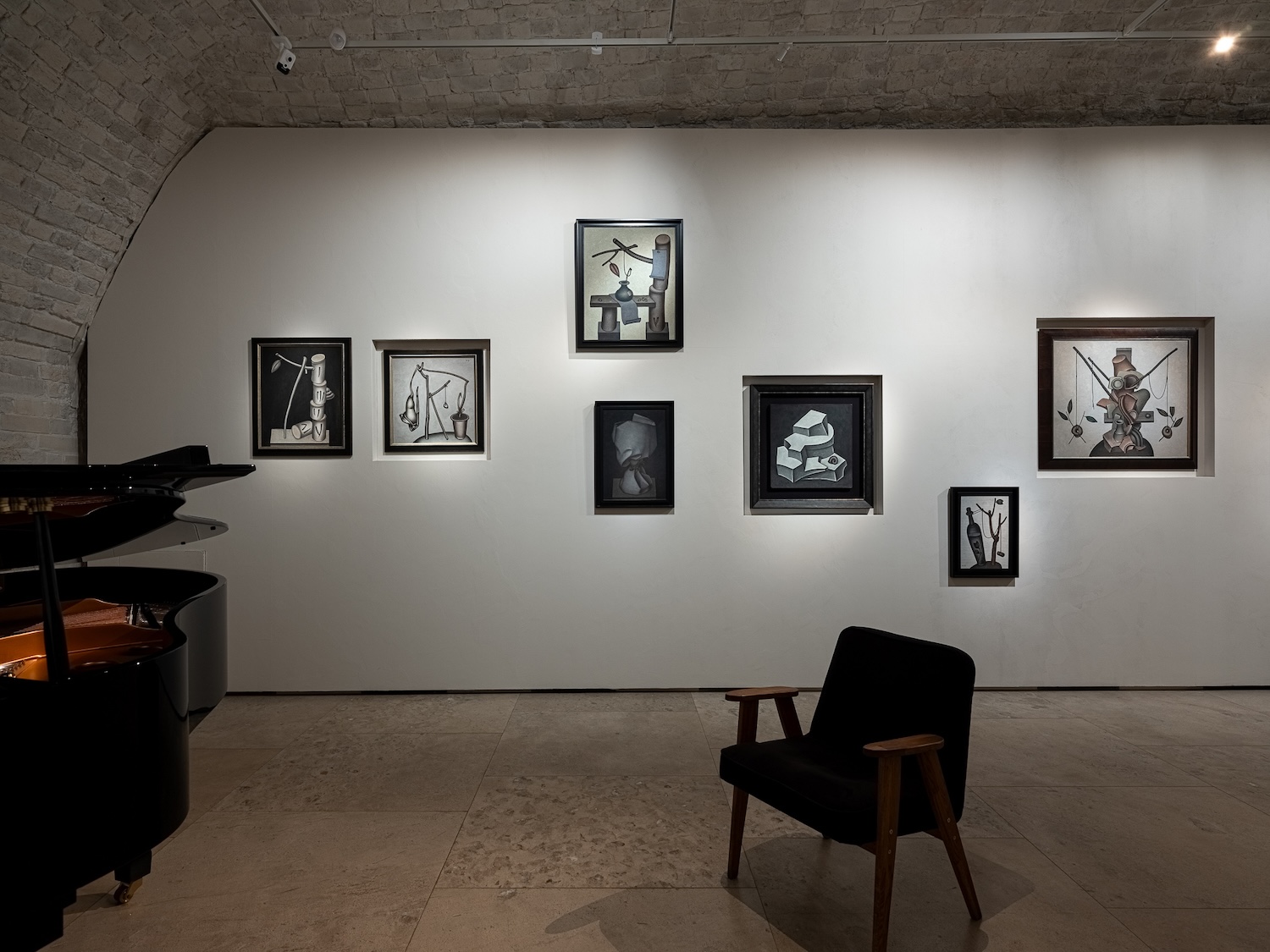
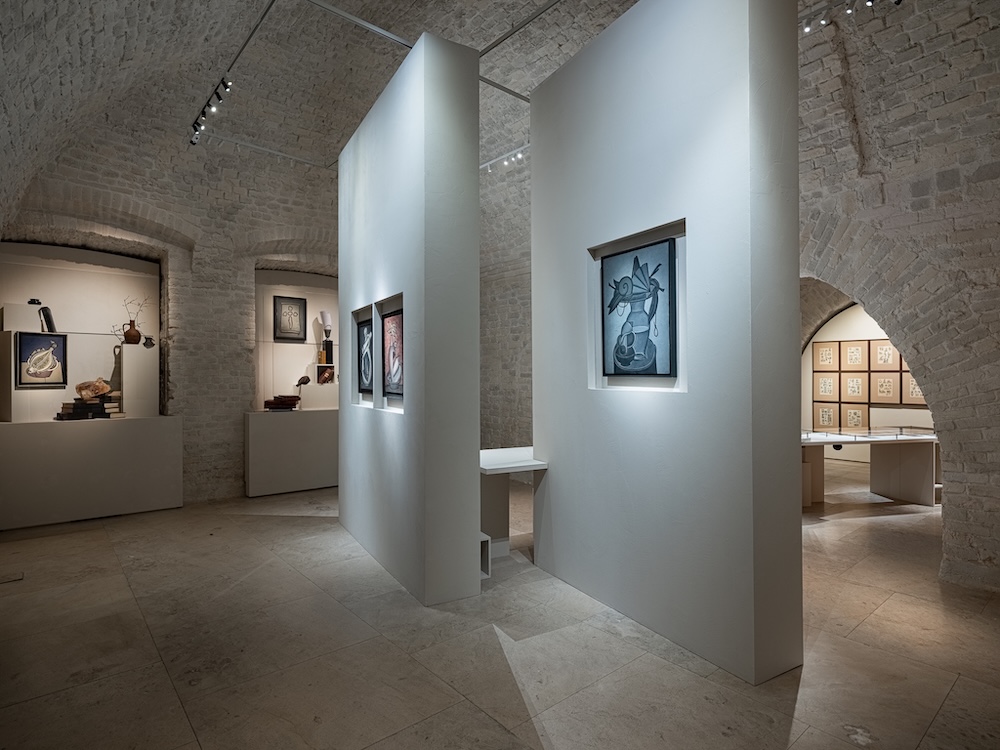
On September 25, 2025, the AZ/ART Center for Contemporary Art on Maroseyka presented the exhibition “Krasnopevtsev. The Equilibrium of Unequal,” dedicated to the 100th anniversary of the artist’s birth. The exhibition brought together more than 50 paintings and graphic works from the collections of the AZ Museum, the Prometheus Foundation, and private collections. Conceived as an exhibition-reflection, it united the artist’s works with unique artifacts from his studio, which over many years became the protagonists of his art: shells, clay jugs, stones, brass candlesticks, and antique books.
Marking the 100th anniversary of the artist’s birth
Dmitry Krasnopevtsev was one of the leading figures of unofficial art. A philosopher-artist, mystic, and symbolist, his work stands in opposition to the bustle and haste of the modern world.
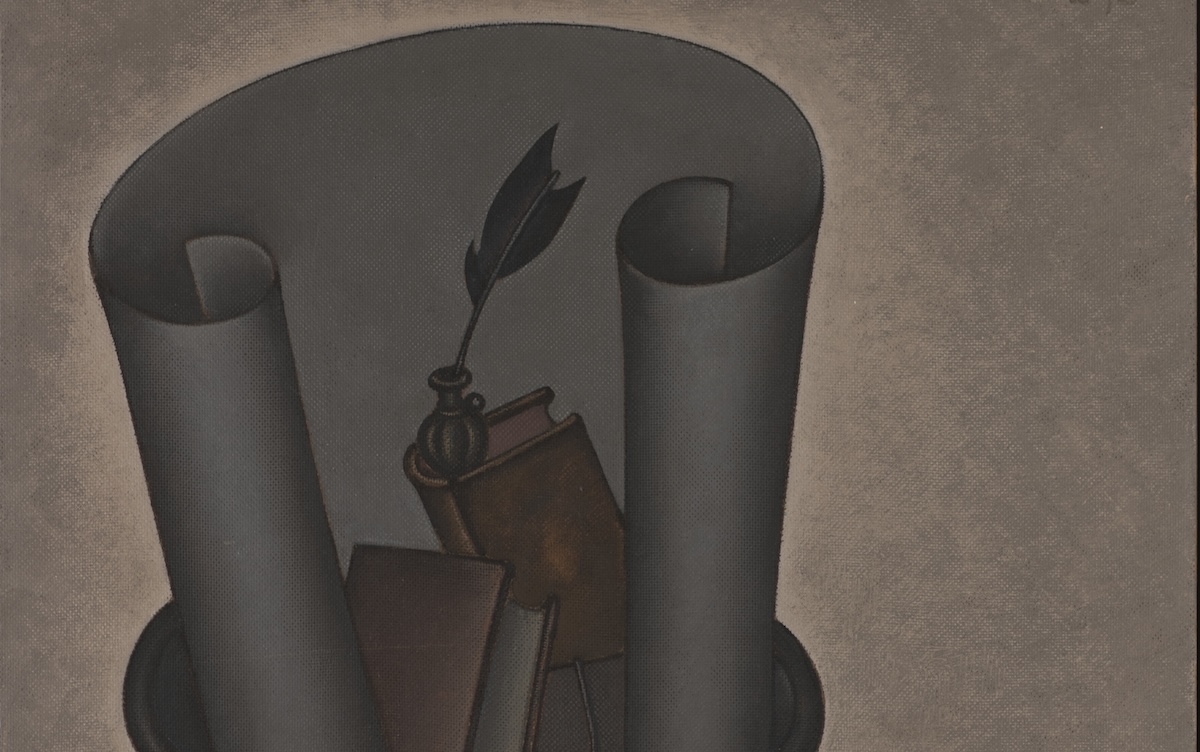
Dmitry Krasnopevtsev has been called a “keeper of time.” He owned a unique collection of ancient artifacts that transformed his studio into an art object during the artist’s own lifetime. For him, the genre of still life became a symbol of an absolute, metaphysical suspension of time. He referred to his compositions as “metaphysical still lifes,” using them to reflect on ontological categories: life, death, time, and eternity. First, people disappeared from his works; then color vanished; and the still life acquired a new artistic aesthetic. Krasnopevtsev revealed the boundless potential of the still-life genre.
The epigraph to the exhibition was a portrait of Dmitry Krasnopevtsev by Anatoly Zverev — one of Zverev’s finest works. It was shown alongside Krasnopevtsev’s early pieces, his theatrical experiments, and posters. The right-hand gallery of the exhibition was transformed into Richter’s apartment, where piano music performed by the great pianist and Krasnopevtsev’s friend could be heard. Concerts by contemporary composers were also held here during the exhibition.
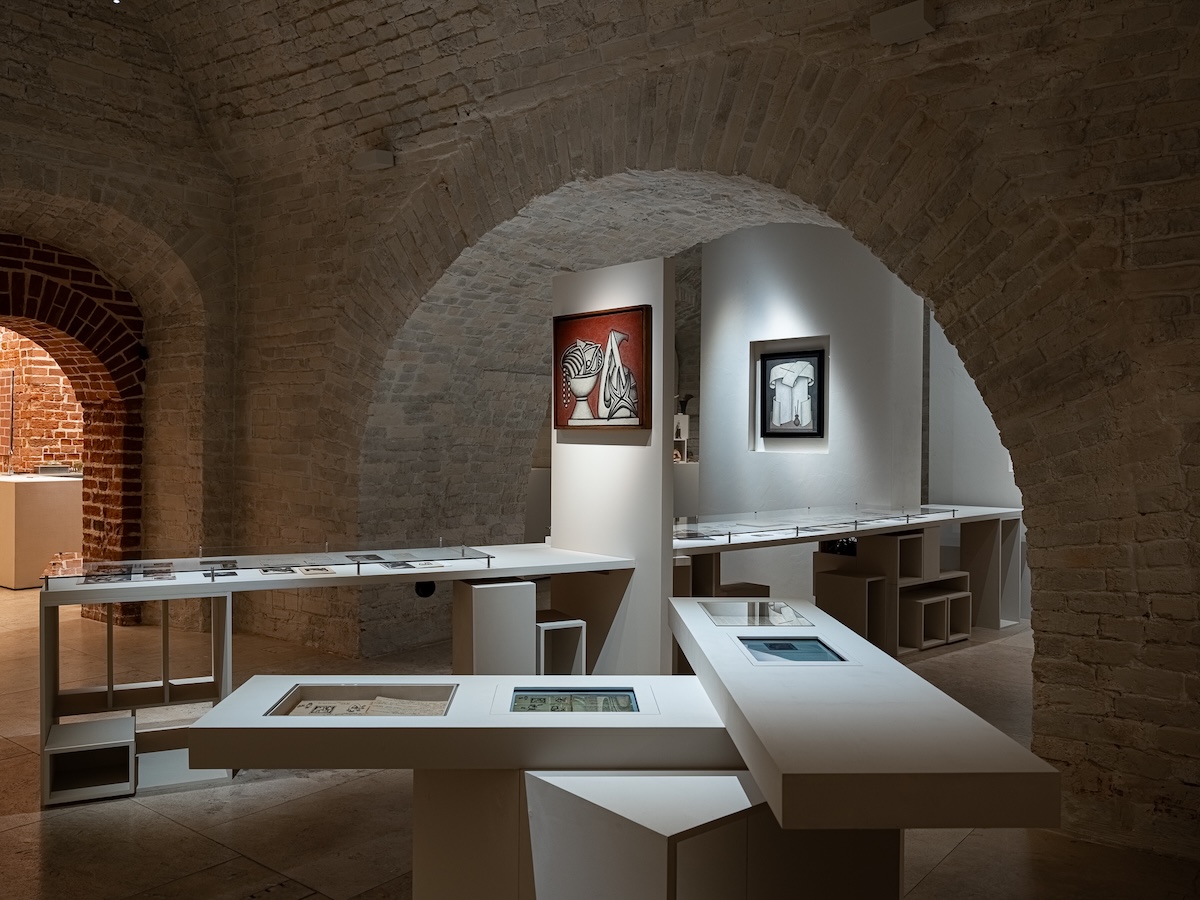
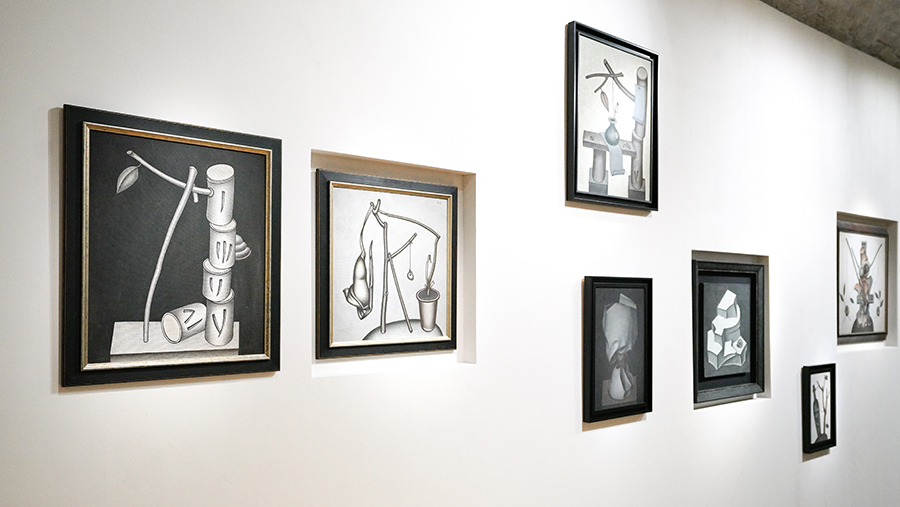
The core of the exhibition consisted of paintings from different periods, while a special place was given to graphic sheets — Krasnopevtsev’s so-called “alphabet.” The sketches on display contained the elements from which his paintings would later emerge. The exhibition also featured notebooks with the artist’s notes, letters, and drawings.
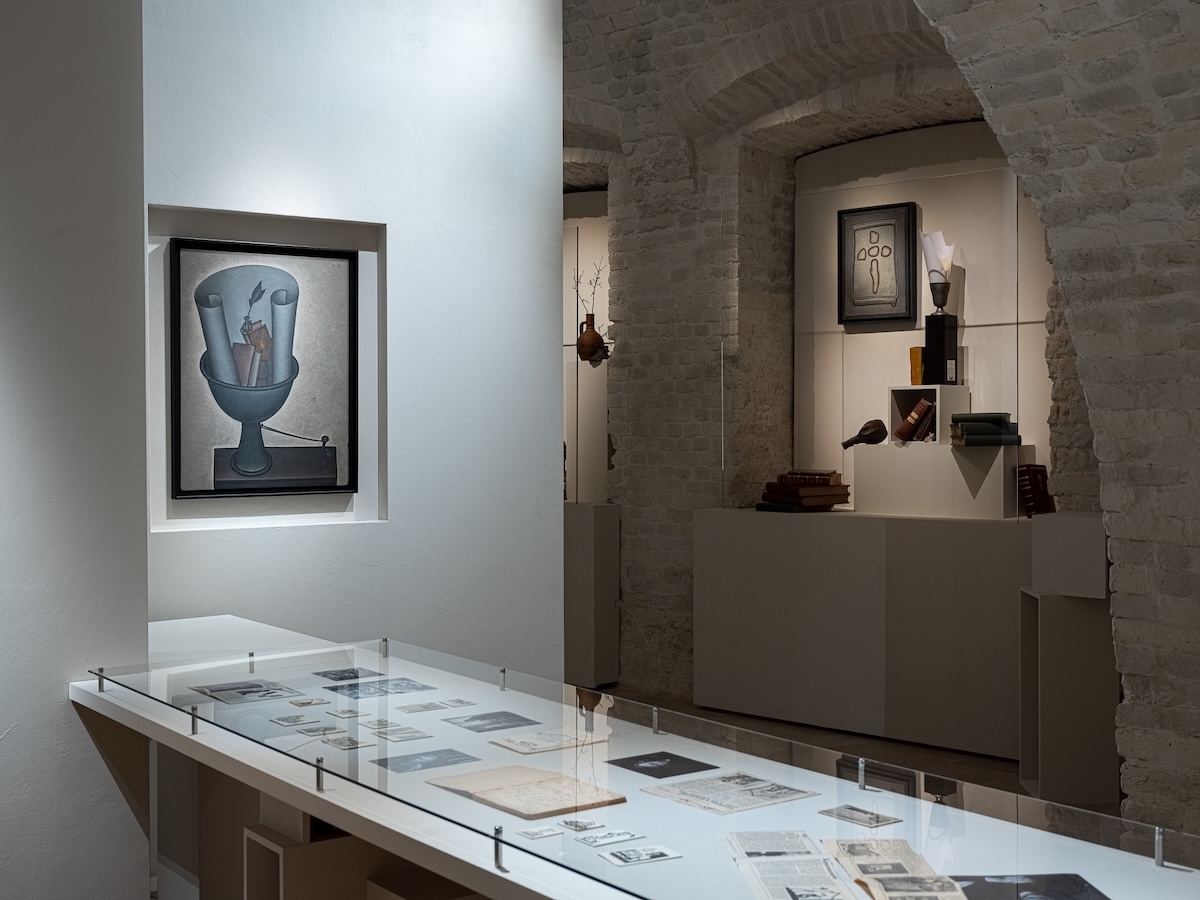
The exhibition architecture referred to Dmitry Krasnopevtsev’s studio — a sacred space filled with particular meanings. The artist was surrounded by antique books, ceramic vessels, stones, seashells, ritual objects, and organic artifacts. Krasnopevtsev did not simply depict them; he created in their presence. Exhibition designer Katya Bochavar created compositions from objects that had been kept in Krasnopevtsev’s studio. These compositions were not copies of paintings or photographs, but rather reflections on the master’s artistic practice.
In the exhibition, visitors could listen through headphones to excerpts from the artist’s diaries, read by actor Boris Pertsel. In this way, Dmitry Krasnopevtsev’s presence became almost tangible. The exhibition was accompanied by a lecture programme and a series of musical concerts prepared by composer Sergey Terentyev and producer Anton Karetnikov, with the participation of the Nikolai Karetnikov Foundation. A catalogue of Dmitry Krasnopevtsev’s paintings was also presented, compiled by Alexander Ushakov.